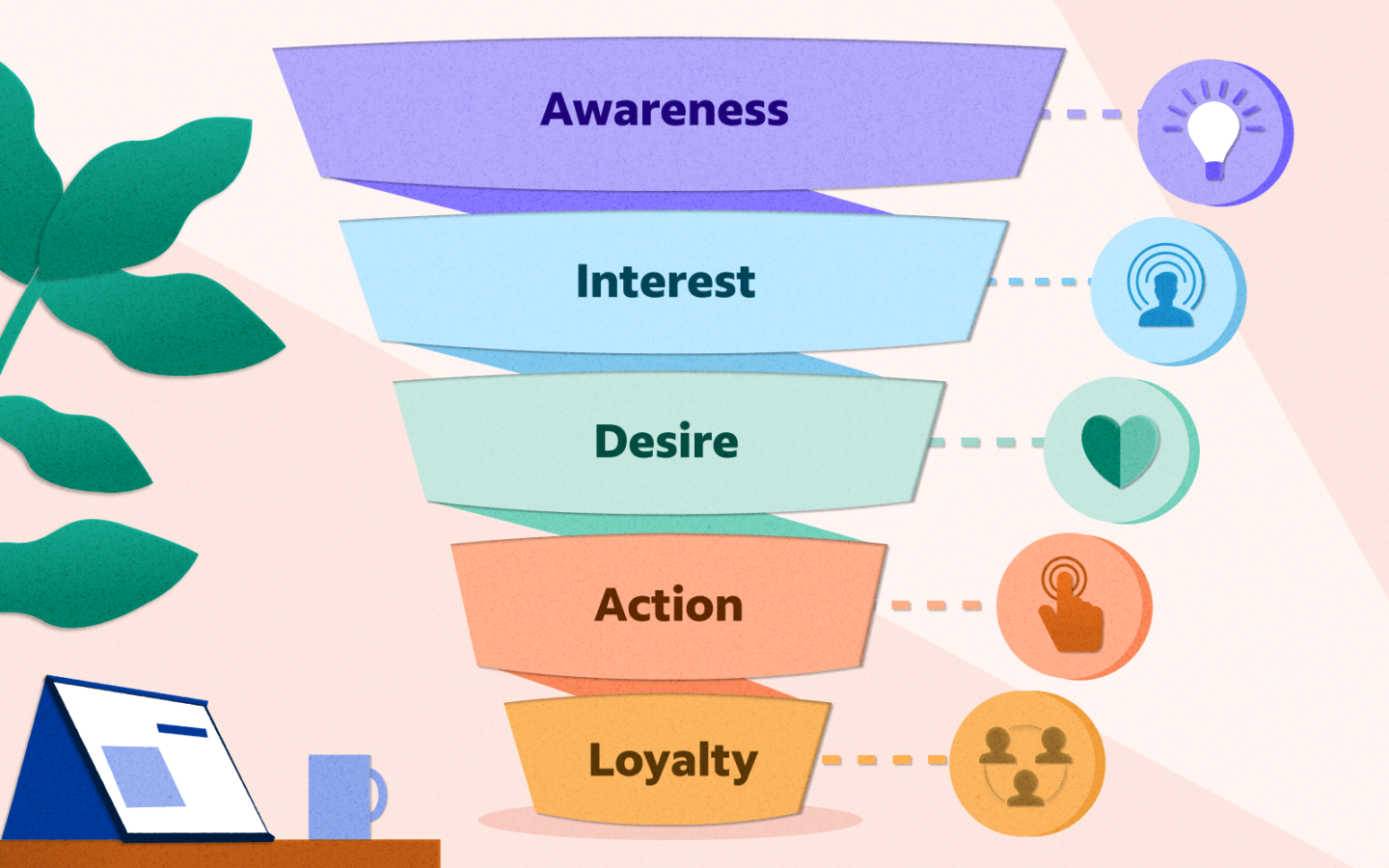
If you’ve ever wondered why some businesses seem to convert visitors into paying customers effortlessly while others struggle despite decent traffic, the answer usually comes down to one thing: they understand what is a sales funnel and actually use that understanding deliberately, rather than hoping customers randomly convert.
Let’s break down what is a sales funnel properly — not the oversimplified version you see in generic marketing posts, but something you can actually apply to your own business.
What Is a Sales Funnel, Simply Explained
Quick answer: A sales funnel is the step-by-step journey a potential customer takes from first becoming aware of your business to actually making a purchase, typically narrowing down from a large audience at the top to a smaller group of actual buyers at the bottom.
Related node: Top Sales Techniques to Close Deals Faster in 2026 · Social Media Marketing Strategy to Grow Your Brand in 2026 · Content Marketing Strategy for Small Businesses in 2026
The “funnel” shape reflects reality — not everyone who discovers your business ends up buying, and that’s normal, not a failure.
The Four Classic Stages of a Sales Funnel
- Awareness — potential customers first discover your business, through ads, social media, search, or word of mouth
- Interest — they engage further, reading content, following your social pages, joining an email list
- Decision — they’re actively comparing you against alternatives, reading reviews, checking pricing
- Action — they make the purchase, completing the transition from prospect to customer
Some frameworks add a fifth stage — retention/loyalty — recognizing that the funnel doesn’t end at purchase, especially for subscription or repeat-purchase businesses.
Why Understanding Your Funnel Matters for Real Growth
I’ve noticed businesses often pour money into the awareness stage (ads, content) while completely neglecting the decision stage — where potential customers actually drop off. Picture a business getting thousands of website visitors monthly but converting almost none, simply because their pricing page is confusing or there’s no clear call-to-action. Fixing that decision-stage friction often produces far more revenue than doubling ad spend.
Related node: Marketing vs Advertising: What’s the Real Difference? · Best Freelancing Websites to Find Clients in 2026
Building an Awareness Stage That Works
- Content marketing — blog posts, videos, social content addressing your audience’s actual questions [link to related guide about content marketing strategy here]
- Paid advertising — targeted ads on platforms where your audience spends time
- SEO — ranking for search terms your potential customers are already using [link to related guide about SEO for beginners here]
- Referrals and word of mouth — genuinely one of the highest-converting awareness sources, though harder to scale deliberately
Nurturing the Interest Stage
Once someone’s aware of you, the interest stage is about deepening that relationship before asking for a sale. Email newsletters, retargeting ads, valuable free content, and social proof (reviews, testimonials, case studies) all work here. Rushing straight from awareness to a hard sales pitch often backfires — people need time to build trust first.
Removing Friction at the Decision Stage
This is where most funnels leak the most potential revenue, in my experience. Common friction points:
- Unclear pricing or hidden costs
- Too many steps in the checkout or signup process
- Lack of social proof or trust signals (reviews, guarantees, security badges)
- Slow response times to sales inquiries
Addressing even one of these systematically often produces a noticeably larger conversion improvement than most awareness-stage investments.
Making the Action Stage Frictionless
Once someone’s decided to buy, don’t make them work for it. Simple checkout processes, multiple payment options, and clear next steps after purchase all matter here. A confusing checkout page can undo weeks of careful funnel-building in a single frustrating moment.
Measuring Your Sales Funnel
- Conversion rate at each stage (how many move from awareness to interest, interest to decision, etc.)
- Drop-off points — where exactly are people leaving?
- Average time spent in each stage
- Cost per acquisition, calculated against actual funnel performance, not just top-of-funnel traffic numbers
Common Sales Funnel Mistakes
I’ve seen businesses build beautifully designed funnels that completely ignore their actual customer’s real objections and questions. A funnel built around what you want to say, rather than what your customer actually needs to know before buying, tends to underperform regardless of design polish.
FAQ
What is a sales funnel in simple terms? It’s the journey a potential customer takes from first discovering your business to making a purchase, typically narrowing at each stage.
How is a sales funnel different from a marketing funnel? They’re often used interchangeably, though “marketing funnel” sometimes focuses more on awareness and interest, while “sales funnel” extends further into decision and action stages.
What’s a good conversion rate for a sales funnel? This varies hugely by industry, but overall funnel conversion (visitor to customer) commonly ranges between 1-5% for many online businesses.
Do small businesses need a formal sales funnel? Yes, even informally — understanding your customer’s journey, even without fancy software, helps identify where you’re losing potential sales.
What tools help build and track a sales funnel? HubSpot, ActiveCampaign, and even simpler tools like Mailchimp combined with Google Analytics can effectively track funnel performance.
How long should a sales funnel take from awareness to purchase? This varies enormously by product complexity and price — a low-cost impulse item might convert in minutes, while a high-ticket B2B sale might take months.
Conclusion
Understanding what is a sales funnel properly helps you diagnose exactly where you’re losing potential customers instead of guessing blindly. Map out your own funnel stages this week, identify your biggest drop-off point, and focus your next improvement effort there rather than spreading energy thin across every stage at once.