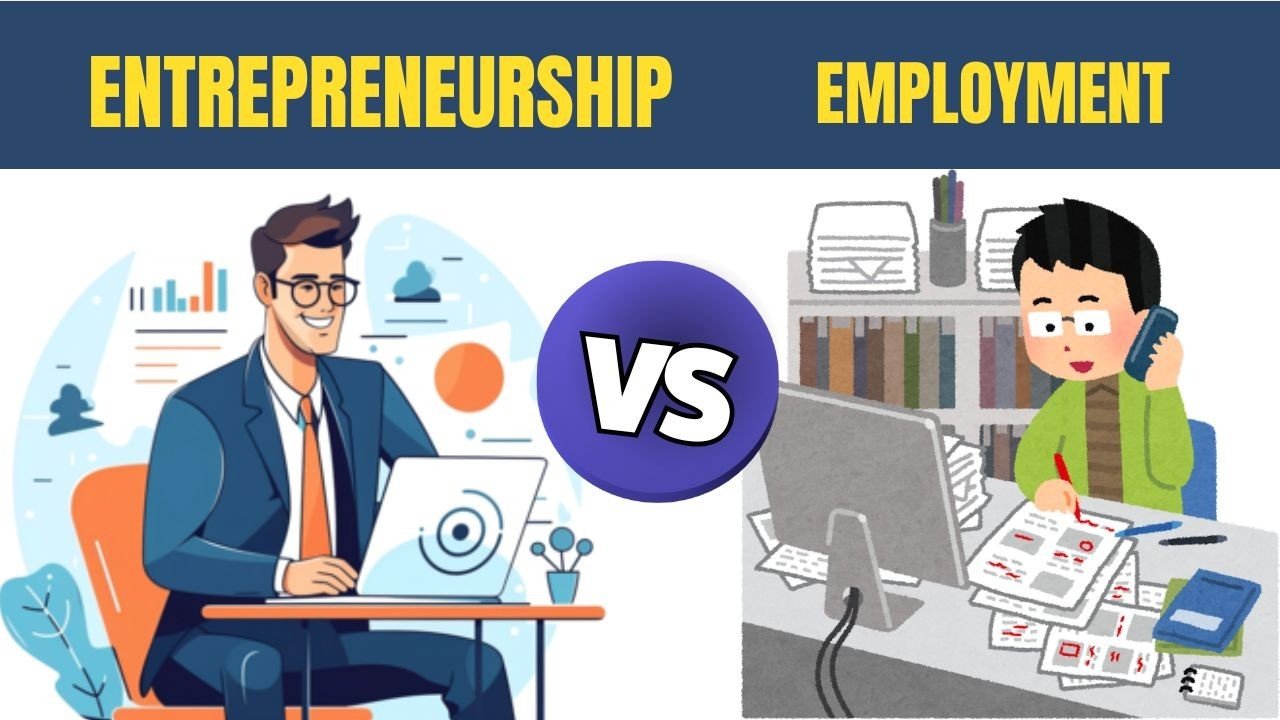
The entrepreneurship vs job debate gets romanticized way too much online. Every second post makes entrepreneurship look like freedom and jobs look like a cage. Reality is messier than that, and honestly, either path can go wonderfully or terribly depending on the person and circumstances.
I’m not going to tell you which one to pick — that decision depends on stuff nobody else can judge for you. But let’s actually break down entrepreneurship vs job honestly, without the motivational poster version of either.
Income Potential and Predictability
Quick answer: Jobs offer predictable, steady income with far less risk; entrepreneurship offers uncapped upside but with real financial instability, especially in the first 2-3 years.
Related node: Time Management Tips for Busy Entrepreneurs in 2026 · Content Marketing Strategy for Small Businesses in 2026 · Best Freelancing Websites to Find Clients in 2026
A job gives you a fixed number every month. Entrepreneurship might give you nothing for six months and then suddenly triple your previous salary the year after — or it might just give you nothing, period. Both outcomes are genuinely common.
Time and Effort Required
Entrepreneurship demands hours that don’t fit neatly into a 9-to-6 schedule. Picture a founder answering customer messages at 11 PM because that’s when her audience is most active — that’s simply part of the deal in the early years.
A job, by contrast, generally has defined hours (though this varies wildly by industry and role). If work-life boundaries matter deeply to you right now, that’s a real factor in the entrepreneurship vs job decision, not something to dismiss.
Related node: Top Government Schemes for Startups in India (2026) · How to Start a Business with No Money in 2026
Learning Curve
- Job: deep, specialized learning in one function — you become excellent at a specific skill
- Entrepreneurship: broad, chaotic learning across sales, finance, hiring, marketing, and more, often all at once
I’ve noticed people who thrive in entrepreneurship tend to enjoy this broad chaos. People who prefer mastery in one domain often find it frustrating rather than exciting.
Risk Tolerance and Financial Cushion
This matters more than most articles admit. If you have dependents relying on your monthly income, jumping straight into entrepreneurship without a financial buffer is genuinely risky — not inspirational, just risky. A more sensible path for many is building a side business alongside a job until it has real traction. [link to related guide about starting a business with no money here]
Career Growth and Recognition
In a job, growth is often externally defined — promotions, appraisals, designations. In entrepreneurship, growth is self-defined, which is freeing for some people and disorienting for others who thrive on clear external markers of progress.
Stability vs Ownership
- Job: stability, but you’re building someone else’s vision
- Entrepreneurship: instability, but everything you build is yours
Neither is objectively better. A stable job that funds the life you actually want isn’t a failure — it’s a valid choice, whatever startup Twitter says about it.
What 2026’s Job Market Actually Looks Like
Layoffs across tech and other sectors over the past couple of years have made pure job stability feel less guaranteed than it used to. This has pushed more people toward entrepreneurship, not necessarily out of pure ambition but as a hedge against depending entirely on one employer.
At the same time, funding for startups has become more selective, meaning entrepreneurship in 2026 rewards genuinely solid business models over hype-driven ideas far more than it did five years ago.
The Hybrid Path Nobody Talks About Enough
Honestly, the entrepreneurship vs job question doesn’t have to be either/or. A huge number of successful founders started their business as a side project while employed, only quitting once it replaced their salary. This reduces risk dramatically and is, in my opinion, the most underrated path for most first-time founders.
FAQ
Is entrepreneurship riskier than having a job? Generally yes, particularly financially in the first few years, though jobs carry their own risks like layoffs or industry decline.
Can I start a business while still working a job? Yes, and it’s often the smartest approach — it lets you validate your idea without cutting off your main income source.
Which pays better, entrepreneurship or a job? Jobs pay more predictably; entrepreneurship has higher ceiling potential but also a real chance of earning less or nothing for a period.
Do I need to choose entrepreneurship to be successful? Not at all — success is personal and can absolutely be achieved through a well-chosen career and job as well.
What age is best to start a business instead of taking a job? There’s no ideal age; people successfully start businesses in their 20s, 40s, and even 60s, depending on circumstances and readiness.
How do I know if I’m ready to leave my job for entrepreneurship? When your side business consistently covers your essential expenses for at least 3-6 months, that’s usually a reasonable signal.
Conclusion
There’s no universal winner in entrepreneurship vs job — it depends on your risk tolerance, financial situation, and what kind of growth actually excites you. If you’re unsure, the hybrid approach of building something on the side while employed removes a lot of the pressure from this decision. Whatever you choose, make it a deliberate choice, not a default one you fell into.